


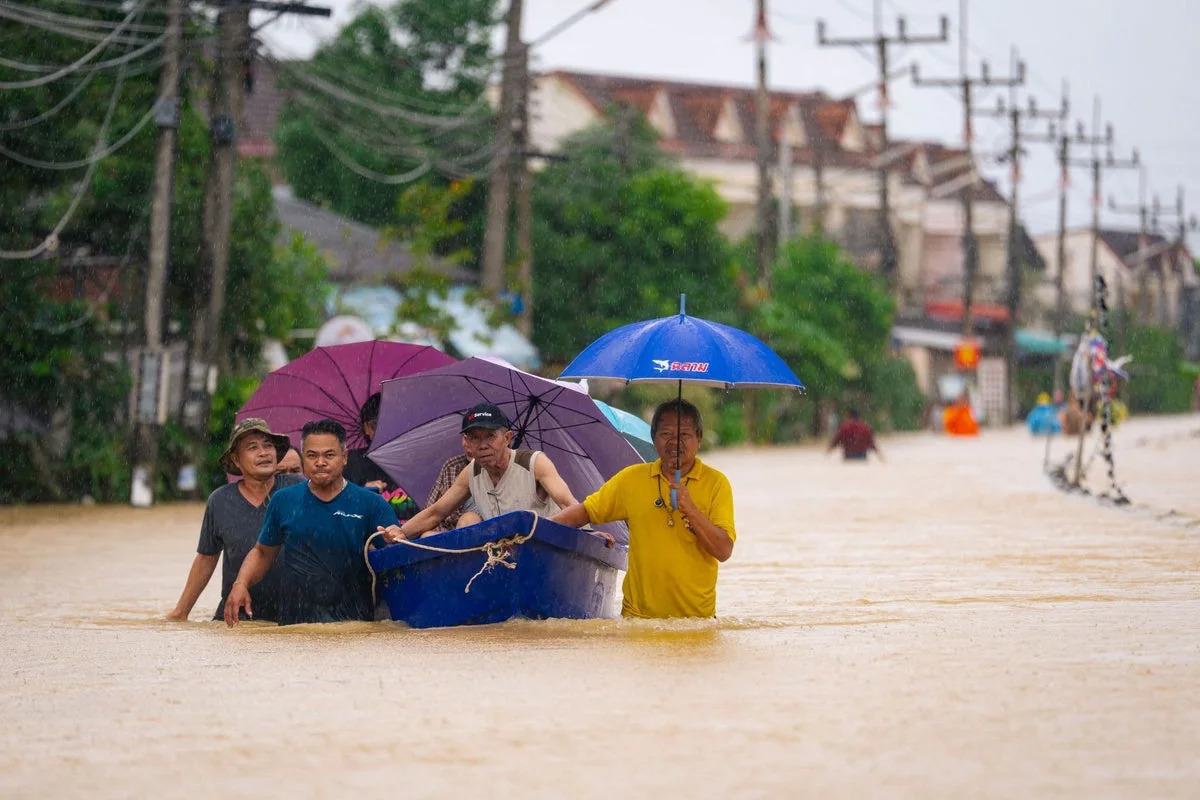
Severe flooding in Thailand, resulting from heavy rainfall, has led to significant damage across 12 southern provinces, claiming at least 181 lives. The region has faced its worst flooding in a decade, with over three million individuals affected by the heavy downpours experienced last week. The tropical storm Koto has now weakened into a depression over the central South China Sea, as reported by Thailand’s meteorological agency.
The hardest-hit provinces include Nakhon Si Thammarat, Phatthalung, Songkhla, Trang, Satun, Pattani, and Yala, where extensive areas are submerged. Despite the extreme weather, as of Monday afternoon, international flights to and from Thailand, including in Bangkok and Phuket, remain operational.
A spokesperson for the government in Bangkok confirmed that nearly 181 fatalities have occurred due to the flooding. The Department of Disaster Prevention and Mitigation has indicated that the severe weather has impacted more than 1.4 million households and 3.8 million people in the affected regions. In response to the disaster, Prime Minister Anutin Charnvirakul has presented plans for recovery and compensation for the southern provinces.
For those considering travel, the UK Foreign Office (FCDO) has not updated its travel advice in light of the flooding. While the FCDO generally warns that the rainy season lasts from May to October, it notes that recent years have seen increased unpredictability in weather patterns, leading to potential disruptions such as flooding and landslides. Travelers are advised to monitor the Thai Meteorological Department for weather alerts.
Regarding holiday cancellations, the absence of a specific travel warning from the Foreign Office means there are no provisions for refunds based solely on the current flooding situation. Travelers are encouraged to check directly with their holiday providers to understand the terms of cancellation. Additionally, while some travel insurance policies may cover natural disasters preventing access to destinations, it is essential to review individual policies for coverage details.
Source: AOL.com