


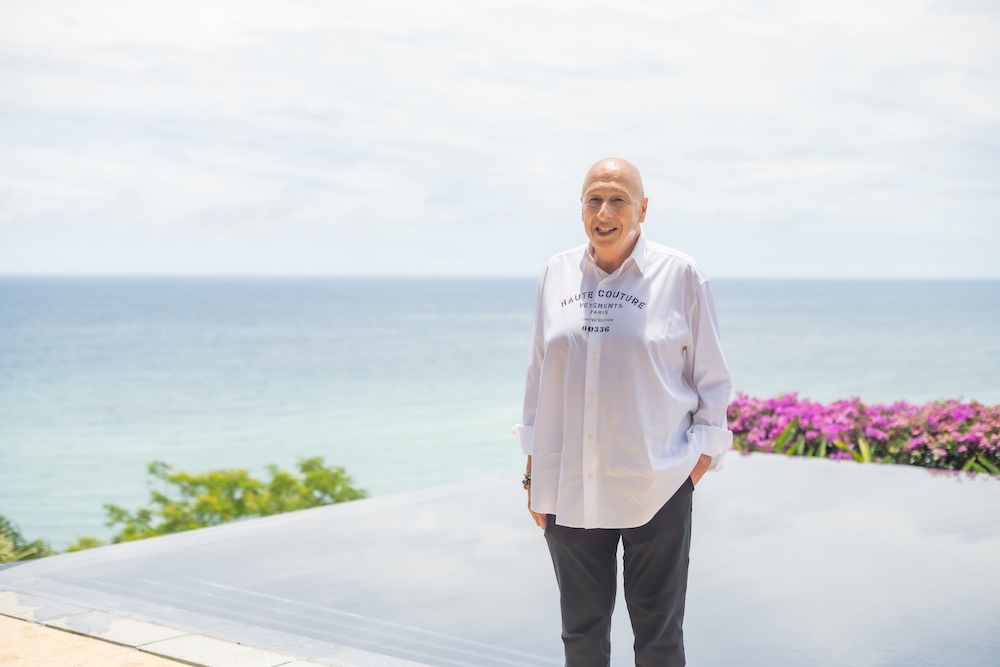
Alan Zeman, a prominent figure in real estate, is leveraging his extensive experience to elevate the residential market in Phuket. “I doubt you can still find outlooks like this anywhere on Phuket,” remarks the sales manager of Andara. “Or the world for that matter.” This statement, while potentially sounding like standard sales rhetoric, holds merit. The breathtaking vista from one of the resort’s opulent hilltop villas epitomizes cinematic beauty, with Kamala Bay curving gracefully below and the Andaman Sea unfolding in a spectrum of blues. Even Andara’s staff find themselves snapping selfies against this striking backdrop as we wait for Zeman to conclude a call with a prospective Hong Kong buyer. As the midday sun pierces through the clouds, the surface of the infinity pool glimmers, and thankfully, the Provençal rosé being served at lunch is chilled. The in-villa chef inquires if we’re ready to indulge in his interpretation of Thai classics. We are indeed ready.
Moments later, Zeman arrives dressed in one of his trademark high-collared white shirts, paired with yoga pants and immaculate designer sneakers. Renowned for establishing Hong Kong’s Lan Kwai Fong nightlife district, Zeman developed Andara over 15 years ago as his personal retreat, which soon evolved into one of Phuket’s premier luxury resorts, playing a pivotal role in shaping the island’s upscale transformation. Our conversation over lunch shifts to Sudara, his latest hillside project located just down the bay. Situated on a steep slope in Bang Tao, Sudara targets a new wave of buyers seeking livability, rental income, and a blend of bold yet understated design. We also touch on Phuket’s resurgence post-pandemic, evolving luxury buyer preferences, and Zeman’s newfound interest in Chinese electric vehicles.
When asked about Sudara’s unique selling points in the current market, Zeman explains, “Sudara aims to provide a luxury resort ambiance at a more attainable price, catering to the modern demand for beauty and intelligence in design. A major innovation we’ve implemented is underground parking, which is a rarity in Phuket due to associated costs. However, this feature significantly enhances the environment, allowing for more expansive gardens and improved landscaping, creating a serene and inviting ambiance. Although it raises costs by 15-20%, it adds value and expedites project completion. We’re also focused on the sensory experience—lighting, textures, and even aromatherapy. I recently consulted with a designer about scent, underscoring our attention to detail. Visitors often mistake our sales office for a spa, asking for massages, which speaks volumes about the atmosphere.
Regarding buyer interest, Zeman notes a strong response from regions like Hong Kong, the Middle East, Europe, and Russia. “We’ve observed buyers swiftly making decisions after touring the site. When the quality is high, the product sells itself,” he states. The rental aspect is also appealing; the traditional high and low seasons in Phuket have faded, influenced by climate change that has heightened demand, particularly from the Middle East, where temperatures can reach 55°C. Here, at 35°C, it feels like a welcome relief, leading to a complete transformation in the rental model.
Currently focused on completing the first phase of Sudara, which has garnered enough pre-sales for bank financing, Zeman intends to initiate construction promptly. He acknowledges that Thai banks have adopted a more cautious approach post-pandemic and due to the broader geopolitical climate, but highlights that their long-standing relationships foster trust. He plans to proceed to Phase 2, initially envisioned as three additional residential blocks, but emphasizes the need for flexibility in response to market dynamics, hinting at potential hospitality or branded ventures in the future.
Zeman has established a reputation for not just delivering products but creating experiences. He elaborates, “Trust is foundational. When individuals step into an Andara villa or a Sudara unit, they feel cared for and at ease. This is not something that can be faked. Every choice, from lighting to furniture layout, contributes to this ambiance. At Andara, we have many repeat guests who feel like family, and we’re witnessing the same trend at Sudara, where homeowners worldwide are connecting and forming a community. This loyalty enables our growth. We have also engaged a professional in Bangkok to explore brand expansion, positioning Andara and Sudara as management brands for other properties, as there is a growing demand for experienced operators capable of delivering high standards and service. This represents our next logical step.
Zeman reflects on Phuket’s evolution, stating, “It’s no longer merely a holiday destination. People are choosing to reside here, enrolling their children in international schools and accessing quality healthcare. The airport is robust, and the lifestyle is appealing. This transformation is evident; a stroll around Boat Avenue at night reveals a diverse mix of residents engaged in daily life. While it retains its resort charm, it is morphing into a functioning city, which influences the type of products sought after—they now must accommodate everyday living rather than just weekend getaways.
Expectations have also shifted dramatically. Buyers are now looking for wellness features, adaptable layouts, natural light, and dedicated workspaces, desiring a sense of community. At Sudara, we’re already witnessing homeowners from Germany, the UK, and Asia bonding over breakfast and sharing experiences. This innate sense of belonging is invaluable.
Having worked throughout Asia for decades, Zeman shares his perspective on the luxury real estate landscape in the region. “Luxury used to revolve around superficial elements—brands, finishes, and prestige. That has evolved. Today, it focuses on how spaces enhance daily life, health, and personal values. The emerging buyers are often transnational, living in one city, investing in another, and traveling frequently. Properties must adapt to this lifestyle, feeling intuitive and tailored to individual needs. While branded residences can be advantageous if the brand carries weight, the execution is paramount. Smaller developers can carve a niche by being focused and local, as there is room for all if the product is intelligently designed.
Addressing the next generation of buyers, Zeman notes their presence and distinct priorities. Younger investors, particularly across Asia, are entering the market with a desire for practicality, connection to nature, and flexibility. They seek options—whether to live in it, rent it, or sell it as their circumstances change. Developers must be attuned to these evolving expectations to thrive in the competitive landscape.
Source: Asia Property Awards