


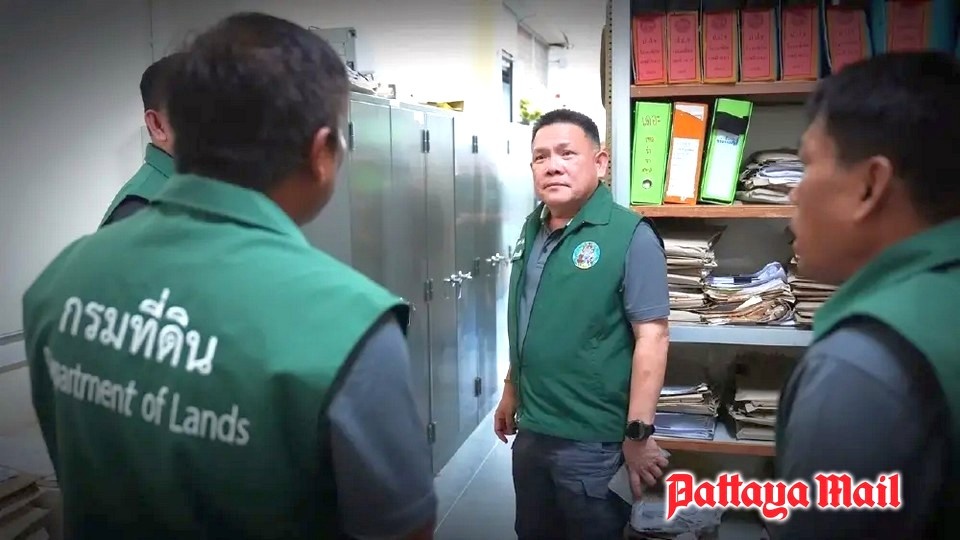
Thai authorities are ramping up inspections of foreign nominee networks, with land offices throughout the country now implementing stricter measures on land registrations.
PATTAYA, Thailand – In recent days, heightened scrutiny has been directed at foreign investors and illegal nominee operations, particularly on key tourism islands such as Koh Phangan, Koh Samui, and Phuket. This comprehensive initiative signals the start of decisive government action aimed at enforcing regulations. Currently, land offices nationwide are taking on a more proactive role, serving as the primary gatekeepers to ensure rigorous checks both before and after the registration of land rights.
The Victor Law Firm in Pattaya, which provides legal counsel, offers an in-depth analysis of how land offices enforce these new regulations, collaborating closely with the Department of Special Investigation (DSI) and the Anti Money Laundering Office (AMLO) to thwart unlawful foreign ownership through nominee arrangements.
1. Enhanced Pre-registration Measures
Land offices have been directed to raise their investigative standards significantly, requiring additional documentation from applicants. They are concentrating particularly on two high-risk scenarios. The first involves Thai nationals purchasing land while married to foreign spouses. Officials are now placing a strong emphasis on verifying the source of funds. The Thai spouse must provide clear proof that the funds used for the purchase are personal assets or independently earned income, and not loans or hidden gifts from the foreign partner. Furthermore, both spouses are required to sign an official declaration, confirming that the foreigner has no ownership interest in the property.
The second scenario pertains to corporate entities with foreign shareholding structures. In cases where limited companies have foreign shareholders—even if their ownership does not exceed the legal limit of 49 percent—officials are conducting thorough background checks on the corporate structure. They investigate the financial sources of every Thai shareholder to confirm their genuine investment capacity and ensure that their bank statements correspond with their shareholdings. This strategy aims to prevent the practice of hiring Thai nationals as proxy shareholders.
2. Post-registration Monitoring Strategies
A significant shift in strategy has emerged, with land offices no longer passively awaiting external complaints. They are now proactively monitoring land use. The first monitoring mechanism involves quarterly reviews, where local land officials track land utilization. They coordinate with the Department of Business Development every three months to detect any changes in shareholders, directors, or management control that could unlawfully benefit foreigners.
The second mechanism focuses on eliminating illegal advertisements. Specialized teams are tasked with overseeing promotional materials for housing projects, real estate developments, and pool villas in major tourist areas. Any advertisements suggesting that foreigners can directly own land or containing questionable legal terms are flagged for further investigation.
3. Collaborative Enforcement Among Agencies
This regulatory push transcends previous limitations faced by the Land Department, facilitating data sharing and delineating responsibilities among three key agencies. The Land Department acts as the initial gatekeeper, screening transactions and reporting suspicious activities. The DSI is responsible for addressing complex cases involving extensive networks or significant asset values, while the AMLO traces financial transactions that may lead to asset seizures under anti-money laundering regulations.
4. Overview of Legal Consequences
The Land Code imposes strict penalties for various offenders. Foreigners unlawfully buying or possessing land may face imprisonment for up to two years or fines not exceeding twenty thousand Baht, or both. They are also required to sell the land within a specified timeframe, ranging from 180 days to one year. Failure to comply empowers the Director General of the Land Department to forcibly sell the property.
Thai citizens or nominees who facilitate land ownership for foreigners are similarly subject to penalties, including imprisonment or fines. These individuals can also be prosecuted as accomplices and face asset seizures in conjunction with the AMLO investigations.
Business operators must exercise extreme caution, as corporate directors and managers may also incur personal criminal liability for offenses committed on behalf of a corporate entity.
In conclusion, the transition of land offices to a proactive inspection approach marks a pivotal change for real estate developers and foreign investors. Transactions that previously relied on regulatory loopholes now face a heightened risk of rejection during registration or retroactive investigation, potentially leading to criminal charges and forced asset liquidations. Real estate operations must now be grounded in full transparency and strictly adhere to legal intents. Conducting comprehensive corporate legal audits from the outset is crucial to safeguarding corporate assets and maintaining reputation.
Source: Pattaya Mail