


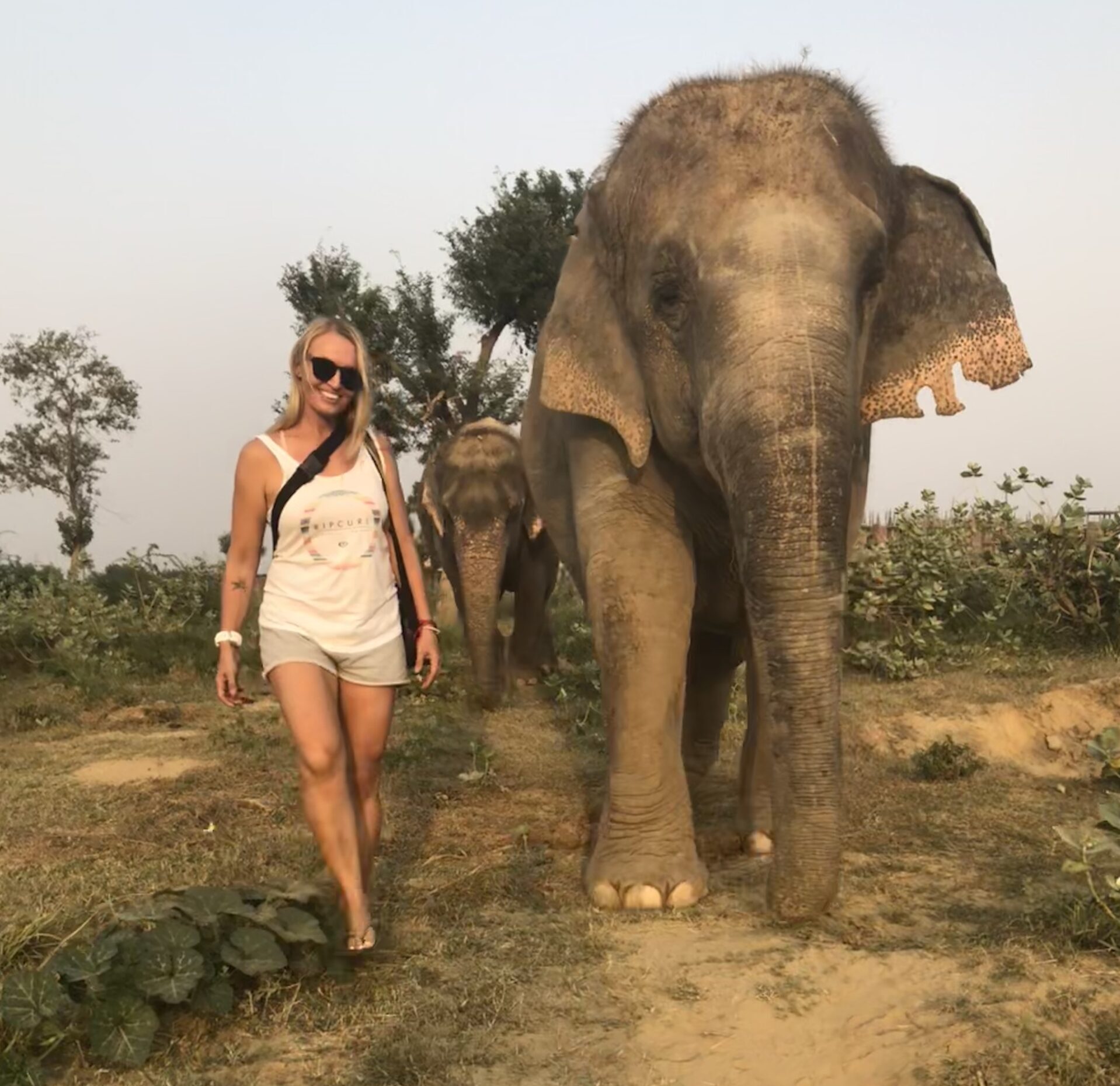
Tiina Titinen, a Finnish expat residing in Phuket, dedicates her efforts to advocating for animal rights. Her current focus is on volunteering with rescued elephants, as shown in her accompanying photo.
Phuket, known for its picturesque white sandy beaches and vibrant sunsets, attracted over 12 million tourists in 2025, contributing significantly to the local economy. However, the booming tourism industry often negatively impacts the environment and local wildlife.
Since arriving in Thailand in 2002, Tiina was once a tourist herself, excited to explore the nation’s offerings. She recalls, “We rode elephants. It was what everybody did back then. It was part of the Thailand experience. I loved animals, and I thought it was a good way to see them. At that time we didn’t know anything was wrong with it.” Such activities, including elephant rides, tiger cafés, and crocodile shows, remain popular among visitors to Thailand.
As of 2021, estimates indicated that approximately 4,000 elephants were living in captivity in Thailand, many of which are involved in the tourism sector, specifically for elephant rides. This practice has faced severe criticism from various NGOs and animal rights organizations.
Tiina returned to Thailand in 2007, taking on the roles of a tour guide and diving instructor primarily for Finnish tourists, and she has continued her journey there ever since. “I love Thailand. I love the people. I love the culture. I love being a guide here. I get to help people make their vacation dreams come true,” she expresses.
Her early fondness for animals, rooted in her childhood in the Finnish countryside, has evolved into a robust advocacy for ethical tourism. “Ethical tourism just means that your holiday activities should not hurt anybody. It is so simple, but so important,” Tiina emphasizes.
Currently, Tiina organizes travel tours that highlight ethical tourism principles through her connections across Thailand and India. “On the tour, we spend time volunteering for different causes, making a difference, and supporting local people and NGOs. It’s a balance of enjoying your time while also giving back to the people and places you visit,” she explains.
Tiina is resolute in her stance against elephant riding, viewing it as incompatible with ethical tourism. “I am ashamed I ever took part in it. Today, every time I see signs for riding camps, I feel a stab in my heart. It is just not right,” she shares.
Over the years since her relocation to Phuket, Tiina has witnessed a shift towards ethical tourism, a development she welcomes, though she believes more progress is necessary. “Some riding camps have stopped offering riding tours and instead provide elephant bathing, which is still not ethical because it includes the same brutal training methods that riding does. The only truly ethical way to experience elephants is just observing them in the wild or in sanctuaries,” Tiina clarifies. “There has been a lot of change over the years, but it is slow. Sometimes I feel hopeless, but I pray that one day elephant riding will be no more.”
With nearly two decades of experience in Phuket, Tiina takes pride in helping thousands of tourists realize their vacation aspirations. “I feel very good that I can share my knowledge and my experience to help other people have the best possible experience. At the same time, I can guide people and explain to them how to have the best time while still remaining ethical,” she states.
Tiina stresses the importance of research in planning ethical travel. She advises potential tourists to scrutinize providers, read reviews, and ask questions, acknowledging that many may misrepresent their practices. “Many providers will lie. They will say something is ethical when it is really not. It is hard to navigate. But I am very grateful I have the chance to help and guide people while ensuring we are being sustainable and ethical. I am always happy to help,” she concludes.
Source: Scandasia