


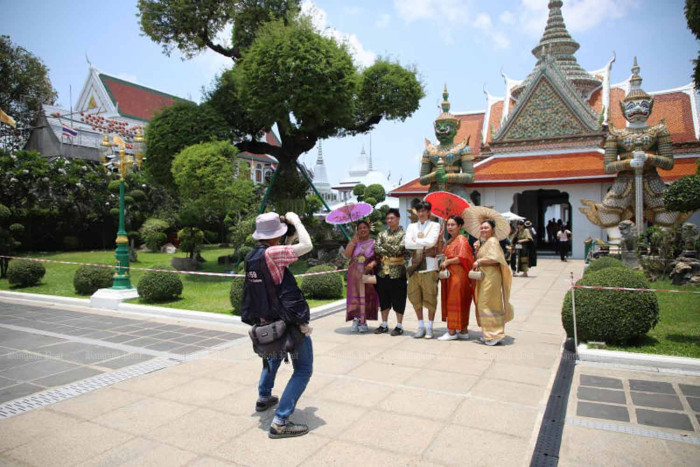
Last month, tourists were seen capturing memories at the Temple of Dawn in Bangkok. Varuth Hirunyatheb
Thai tourism operators remain optimistic about the upcoming high season, anticipating robust bookings, especially from European travelers, as the third quarter approaches.
Thapanee Kiatphaibool, the governor of the Tourism Authority of Thailand (TAT), shared that despite the ongoing low season, which has shown sluggishness, many operators expect a healthy influx of bookings during the winter high season at year-end, even amid geopolitical concerns.
She indicated that should the current conflicts diminish, inbound tourism could rebound swiftly, particularly in the premium leisure sector. “Despite elevated fuel prices and limited flight availability, major travel agencies are confident in the long-term demand for Thailand, especially for cruise and high-end tourism packages,” she stated.
However, Thailand faces stiff competition for budget-conscious tourists, with countries like China and Vietnam having captured a significant portion of the market share.
Ms. Thapanee further noted a shift in tourist behavior, highlighting that the average lead time for advance bookings has reduced to 16 weeks before travel, a stark contrast to the previous average of seven months, indicating a more cautious approach to travel expenditure.
According to TUI, the UK market has seen a 10% decline in summer bookings due to worries surrounding the ongoing war and the rising cost of living. Nevertheless, the agency anticipates an influx of visitors from the Middle East looking to escape their summer heat between July and September, supported by positive indicators from airlines like Flydubai, which plans to offer twice-daily flights to Don Mueang International Airport starting July 1.
Bill Barnett, managing director of C9 Hotelworks, expressed uncertainty regarding Phuket’s outlook for the fourth quarter due to the unpredictable geopolitical landscape. However, he noted that European tourists are likely to still choose Thailand this winter, attracted by favorable weather, appealing destinations, and improved flight connections, and are willing to invest in their holiday experiences.
Mr. Barnett mentioned that airlines such as Thai Airways are modifying their flight routes by introducing more direct connections between Asia and Europe, bypassing the Middle East. Additionally, international airlines, including Virgin Atlantic, are maintaining their flight schedules to Phuket, while Eastern European and Russian tourists are expected to continue their travels, thanks to routes that avoid conflict zones.
Conversely, hotels may find it challenging to raise room rates significantly compared to last year, as mass-market segments are prioritizing spending carefully. Mr. Barnett expressed concern over regional competitors like Vietnam, which are enhancing their attractions and vying for the same tourist demographics as Thailand.
Kasmaporn Limpanapongthep, president of the Krabi Hotel Association, noted that European and long-haul tourists constitute a significant market for Krabi, accounting for over half of its visitors. She reported that forward bookings are slowly improving, reflecting a demand from these segments, although overall forward bookings are still lagging as tourists exhibit caution regarding their spending habits.
Currently, four- to five-star accommodations in Krabi are experiencing only 30% of forward bookings for the high season.
Source: Bangkok Post