


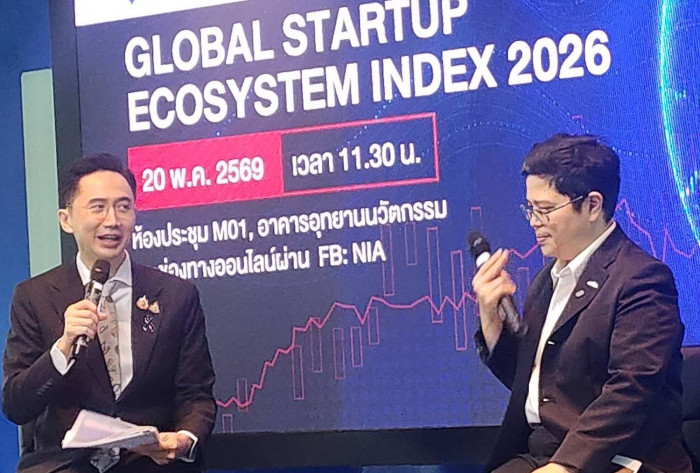
For the first time in six years, Thailand has secured a spot in the top 50 of global startup rankings, reaffirming its status as Southeast Asia’s premier hub for medical technology, as per the 2026 Global Startup Ecosystem Index by StartupBlink. The index evaluates 120 countries and over 1,500 cities around the globe, placing Thailand at 49th, which is its best ranking in six years, following Singapore, Indonesia, and Malaysia in the Southeast Asian region.
Yodchanan Wongsawat, the minister of higher education, science, research and innovation, highlighted that Thailand experienced one of the fastest growth rates among the top 50 countries, with an impressive increase of 62.6%. In the medical technology sector, Thailand ranks first in Southeast Asia and eighth globally, showcasing its appeal as a center for innovation and technology.
The cities of Bangkok, Chiang Mai, and Phuket have emerged as significant hubs for startups, attracting both investors and digital nomads. Bangkok advanced five positions to 76th globally and is ranked fourth in Southeast Asia, also being recognized as the leading robotics city in the region and 17th worldwide. Chiang Mai and Phuket demonstrated remarkable growth rates of 91.6% and 85.9%, respectively, indicating a burgeoning momentum in innovation beyond the capital.
New entrants in the rankings include Pattaya, Samut Prakan, Pathum Thani, and Nakhon Pathom, contributing to Thailand’s position as the third-ranked Southeast Asian country for the number of listed startup cities.
Mr. Wongsawat stated that the government acknowledges startups as a critical growth engine that can propel the digital economy, enhance targeted industries, create high-skilled employment opportunities, and improve the nation’s global competitiveness. He remarked, “Thailand entering the top 50 and becoming the leading medtech hub in the region signals growing confidence from investors, entrepreneurs, and international innovation networks.”
To bolster the country’s innovation system, the Ministry of Higher Education and the National Innovation Agency (NIA) are implementing initiatives such as matching fund schemes, university holdings, and the expansion of the Startup Thailand League. Mr. Wongsawat pointed out that Thailand’s ascension in the medtech sector reflects its readiness to engage with the rapidly growing global wellness economy, which is anticipated to drive future growth.
Despite these advancements, challenges remain for startups, including limited access to funding, inadequate testing opportunities for innovations, and fragmented support networks. Krithpaka Boonfueng, executive director of the NIA, announced plans to transform Bangkok’s Ari district into a dedicated innovation and startup community aimed at linking entrepreneurs with global investment and technology networks.
Eli David Rokah, co-founder and CEO of StartupBlink, commented that Thailand’s improvements indicate a gradual stabilization of its startup ecosystem after years of slow progress, though he cautioned that structural weaknesses could hinder its regional competitiveness. He noted that a significant challenge lies in Thailand’s limited global orientation, with many startups primarily targeting the domestic market rather than seeking regional or international growth. “Startup founders need to adopt a broader mindset if Thailand wants to compete more effectively within Southeast Asia and globally,” Mr. Rokah added.
Compared to its regional peers, Thailand continues to grapple with issues related to taxation, investment incentives, banking systems, and regulatory clarity, making it less attractive for entrepreneurs aiming to establish scalable global businesses. Consequently, some promising founders are opting to register their companies in more business-friendly jurisdictions abroad, a trend that analysts warn poses a long-term risk to Thailand’s innovation economy.
Source: Bangkok Post